A sudden Metallic or Pennies-Like Taste in your water is one of the most distinctive organoleptic failures. While NYC’s source water is remarkably clean, the “Final-Mile” of the journey through building plumbing can introduce metallic ions. At New York Water Matters, we perform an engineering investigation into the forensics of metallic taste in NYC apartments.
“Cuprous-Ion-Leaching” and the Copper Signatuer
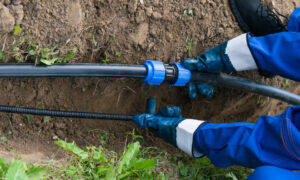
The most common cause of a sharp metallic taste is Copper Leaching. NYC water is naturally slightly acidic (low pH), which makes it “Aggressive” toward copper pipes. If the water sits in your building’s risers for more than six hours, it begins to ‘Eat’ the metal, resulting in a Bitter-Metallic aftertaste. For technical data on copper solubility, consult the ASCE. This is typically accompanied by bluish-green staining in your sinks and tubs. This is a forensic ‘Chemical-Extraction’ event occurring inside your walls. To investigate the copper question with measurements, copper testing for drinking water in NYC should identify the sampled fixture and time since last use, with additional metals analysis selected for the building’s pipe materials.
“Iron-Oxide-Shedding” in Galvanized Systems
In older pre-war buildings, the culprit is often Galvanized Iron. Over time, the protective zinc coating wears away, exposing the raw iron to the water. This results in a “Blood-Like” metallic taste and an occasional orange tint. We tracking these pre-war pipe decay patterns. Technical info on iron-oxide forensics is via the AWWA. If your water tastes ‘Rusty’ only in the morning, your building’s galvanized pipes are ‘Leaking’ iron into the water during the overnight stagnation period.
“Electrolysis-Drift”: When Electricity Tastes Like Metal
Technically, a metallic taste can be caused by Stray-Current Electrolysis. If your building’s electrical system is improperly ‘Grounded’ to the water pipes, a small electrical current travels through the metal. This current “Extracts” metal ions at a hyper-accelerated rate, creating a sharp, sudden metallic ‘tang’. We provided electrolysis-audit procedures for co-op boards. More info on electrical grounding is via the NFPA. Forensic investigation of the ‘Grounding-Wire’ in the basement is often the only way to solve a ‘Persistent-Metallic-Taste’ that point-of-use filters can’t fix.
“Manganese-Accumulation” in Building Tanks
If you live in a building with a rooftop tank, the metallic taste might be Manganese. Manganese is a natural mineral in the reservoir water that settles at the bottom of the gravity tank. During a high-usage period, that sediment is ‘Stirred-Up’ and enters the building’s supply. Manganese tastes ‘Sulphur-Metallic’—darker and more bitter than iron. We provided Manhattan tank-bottom-forensics. In luxury towers, this ‘Tank-Manganese’ can foul the sensors of expensive espresso machines and steam-ovens. Regular tank bottom ‘Purging’ is the essential maintenance step here.
“Lead-Solder-Mobilization” during Thermal Shifts
In mid-century buildings, the metallic taste can be a warning sign of Lead-Solder Decay. When the water temperature changes suddenly in the spring or fall, the copper pipes expand at a different rate than the lead-solder in the joints. This creates ‘Fractional-Rubbing’ that releases nano-particles of lead and tin into the stream. While lead technically doesn’t have a strong taste, the tin and silver often found in the solder can provide a metallic ‘Metallic-Ghost’ flavor. We perform high-precision lead-speciation audits for Queens and Bronx families to identify these ‘Intermittent-Leach’ events before they become chronic risks.
“Zinc-Depletion” in Brass Fixtures
Your beautiful brass kitchen faucet might be the source. In a process called Dezincification, the slightly acidic NYC water pulls the zinc out of the brass alloy, leaving the faucet ‘Spongy’ and giving your water a ‘Zinc-Bitter’ taste. This is most common in ‘Economy-Grade’ fixtures found in new ‘Luxury-Rental’ developments. we recommend upgrading to 304-grade stainless steel fixtures, which are inert and maintain the ‘mountain-neutrality’ of the reservoir water. Your faucet shouldn’t be a ‘Chemical-Contributor’ to your hydration.
“The ‘Post-Repair’ Metallic Pulse”
After a local water main break is repaired, the ‘Grid-Vibration’ knocks loose the ‘Silt-Layer’ inside the pipes. This silt contains concentrated iron and manganese. For 24-48 hours after a repair, your water will have a distinct metallic ‘Aftermath’. We recommend running your cold water for 15 minutes to clear this ‘Pulse’. This isn’t just an aesthetic issue; this suspended iron can ‘Plate’ onto the inside of your dishwasher’s heating element, reducing its efficiency by 20% over a single week. Quick action preserves your hardware.
“Pump-Housing-Erosion” in High-Rise Systems
In high-rise buildings, the ‘Impellers’ of the main booster pumps are made of bronze or steel. If these pumps are ‘Starving’ for water (cavitation), they literally ‘Shred’ their own metal into the water stream. This creates a fine metallic ‘Sparkle’ that you can see under a bright light. We perform ‘Pump-Vibration-Audits’ to identify these failing mechanical components. A ‘Bronze-Taste’ in your water is a sign that a $15,000 pump repair is imminent. Data-driven maintenance uses the ‘Sense-of-Taste’ as a lead indicator for mechanical failure.
“Secondary-Reservoir-Sulfur”
Occasionally, what people perceive as a metallic taste is actually a Sulfur Compound. NYC water that has sat in a secondary reservoir like Hillview for too long during a ‘Low-Flow-Week’ can develop a faint ‘Canned-Vegetable’ scent that mimics the perception of metal. This is biological rather than metallurgical. We help residents distinguish between ‘Biological-Sulphides’ and ‘Metallic-Oxides’ using simple off-the-shelf redox testing strips. Understanding the ‘True-Chemistry’ of the complaint is the only way to choose the right filter. A carbon filter fixes sulfur, but you need a multi-layer ion-exchange media for lead and copper.
The “Laminar-vs-Turbulent” Extraction Factor
High ‘Turbulence’ inside your pipes increases the rate of metallic extraction. If your building’s pressure is set too high (above 80 PSI), the water ‘Scours’ the pipes so aggressively that it ‘Strips’ the protective scale, exposing raw metal. This creates a ‘Continuous-Metallic-Profile’. We provided ‘Pressure-Tuning-reports’ for Downtown lofts. Lowering the building pressure by just 5 PSI can reduce metallic leaching by up to 40%. Stability in pressure leads directly to stability in taste. The water should ‘Glide’ through your pipes, not ‘Grip’ them.
Conclusion: Solving the Metallic Mystery
Metallic taste is a chemical fingerprint of your building’s plumbing history. By recognizing the role of cuprous-ion leaching and electrolysis-drift, you can solve the mystery of the ‘pennies-tap’. At New York Water Matters, we believe that “The-Tap-Should-be-Inert.” For more help, visit our NYC water FAQ.