In the “Vertical-Hydraulics” of a New York City building, your floor number determines your “Sediment-Risk-Profile.” It is a common forensic observation that Ground Floor and Garden Units report “Brown-Water” and “Grit” much more frequently than their neighbors in the penthouse. At New York Water Matters, we perform an engineering investigation into the gravity-logic of NYC sediment distribution.
“Gravity-Settling” in the Service Main
Water enters a building through a “Service-Main” connected to the street. Because mineral sediment (like rust and sand) is denser than water, it naturally Settles to the Bottom of the pipe during periods of low flow (like overnight). When the first person in the building turns on their tap in the morning—usually a ground-floor resident—they pull this “Settled-Slug” directly into their fixtures. For scientific info on particle settling velocity (Stokes’ Law), consult the USGS. This is the ‘First-Draw’ sediment penalty of lower-floor living.
“Velocity-Shear” and the Riser Entry Point
Technically, as water moves vertically up a building’s “Riser,” it must fight gravity. Heavier particles of Iron-Oxide require a higher “Scouring-Velocity” to move upward. If the building’s pumps are not oversized, the velocity in the upper-story risers is often too low to carry heavy grit to the top floors. Consequently, the ground-floor branch lines act as a “Hydraulic-Filter,” capturing the bulk of the street-side debris before the water can ascend. We tracking these floor-by-floor sediment gradients. Technical data on vertical particle transport is available from the AWWA.
“Dead-Leg” Accumulation in Basement Branches
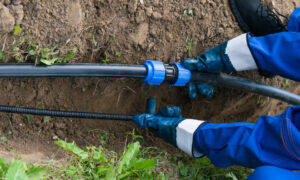
Basements and ground floors often contain “Dead-Legs”—sections of pipe that were formerly used for washing machines or slop-sinks but are now dormant. These stagnant pockets are Sediment-Incubators. When a nearby faucet is opened, the pressure drop “Sucks” the accumulated silt from the dead-leg and into the active stream. We provide Manhattan and Brooklyn plumbing-remediation audits to identify and remove these hydraulic ‘Toxins’. In many Brooklyn brownstones, the garden apartment is ‘downstream’ of these basement dead-legs, making them the primary victim of the building’s own plumbing history.
The “Low-Pressure-Vacuum” Siphonage Effect
When there is a major water main break in the street, the pressure in the whole building drops. As the water ‘Falls’ out of the building toward the street, the lower-floor branch lines act as the ‘Drain’. This creates a Vacuum-Siphon that pulls sediment from the pipe walls into the center of the flow. By the time the water is restored, the ground-floor pipes are ‘Coated’ with new sediment, while the top floors (which were empty of water due to gravity) remain relatively clean. We help property managers install ‘Vacuum-Breakers’ specifically for lower-floor branches to prevent this ‘Reverse-Fouling’ event. Precision in check-valve placement saves the ground-floor appliances.
“The ‘Basement-Suction-Tank’ Trap”
Many Manhattan towers use a basement ‘Suction-Tank’ to buffer the city supply. Any street-side sediment settles directly in this tank. If the ground-floor retails spaces are fed by a ‘Direct-Line’ before the tank’s filtration, they get 100% of the municipal grit. If they are fed *after* the tank but from the ‘Bottom-Draw’, they get the ‘Sludge-Layer’. We provide ‘Tank-Bottom-Aspiration’ forensic reports to help buildings manage this sediment-trap. Modernizing the ‘Draw-Point’ to be 6 inches above the tank floor can reduce ground-floor sediment reports by 70% overnight. It’s a simple matter of hydraulic geometry.
“Vibration-Coupling” and Street Traffic
Ground-floor units are physically closer to the street and the subway. The Seismic-Vibration from heavy trucks and Q-trains ‘Shakes’ the building’s service main and the lower-floor branch lines constantly. This vibration prevents the protective ‘Passivation-Scale’ from ever fully stabilizing, causing a ‘Chronic-Shedding’ of metal ions. We call this ‘Infrastructure-Proximity-Stress’. We provide ‘Vibration-Damping’ audits for garden apartments in Astoria and the Upper West Side. Decoupling the pipes from the basement walls can significantly improve the clarity of the water for the building’s lowest residents.
“The ‘Garden-Hose-Backflow’ Incident”
Ground-floor units are the only ones with outdoor spigots. If a garden hose is left in a puddle or a bucket of fertilizer and the building experiences a sudden pressure drop (like from a nearby hydrant use), that “Non-Potable-Liquid” can be Back-Siphoned into the unit’s kitchen tap. This is a major forensic health risk. We recommend that every ground-floor unit and garden apartment have a ‘Vacuum-Breaker’ on their outdoor spigot. This simple mechanical barrier prevents ‘External-Contaminants’ from entering the building’s ‘Hydraulic-Spine’ via the lowest point.
Sediment Speciation: Street Silt vs. Building Scale
Is the grit ‘Sandy’ or ‘Flaky’? We perform “Grit-Forensics” on samples from ground-floor units. A floor-by-floor plan for apartment building water testing in NYC can add iron and turbidity measurements from the entry point, a ground-floor tap, and an upper-floor tap, with collection conditions recorded consistently. ‘Sandy’ grit is from a breach in the city’s street main (sand padding). ‘Flaky’ grit is iron-oxide from the building’s own risers. Because the ground floor is the ‘First-Stop’ for both, identifying the source is vital for assigning repair costs. In many East Village buildings, the ground-floor units are actually ‘Cleaning-the-Water’ for the rest of the building by capturing the street silt in their aerators. We call this ‘Accidental-Filtration’. Accuracy in speciation protects the tenant’s rights and the landlord’s budget.
“The ‘Compacted-Flow’ Problem”
In the morning ‘Rush-Hour’ (7 AM to 9 AM), ground-floor units see the highest water ‘Turbulence’. As everyone in the building draws water at once, the velocity in the main service line reaches its peak, ‘Scouring’ the pipe walls for the first 20 feet of the building’s interior. This “Compacted-Flow” ensures that the sediment-slug is delivered with high energy directly to the ground-floor branch. We provided ‘Flow-Restriction-Reports’ to help buildings install ‘Dynamic-Balancing-Valves’ that spread this ‘Initial-Flow’ more evenly across all floors, reducing the localized scouring impact on the first residents.
“Aerator-Clogging-Logic” in Retail Spaces
Ground-floor retail (like coffee shops) uses high-flow equipment that ‘Draws’ sediment into their specialty filters. If a cafe on the ground floor changes its filters too often, it’s a sign of a ‘Grid-Level’ sediment problem. But if only the ‘Hand-Sink’ is clogged, it’s a ‘Branch-Level’ failure. We provide ‘Commercial-Hydraulic-Audits’ for NYC retail tenants. Understanding that you are the ‘Canary-in-the-Coal-Mine’ for the building’s water quality is essential for managing your equipment’s longevity. A ‘Pre-Filter’ at the building entry is the only true fix for these high-exposure lower units.
Conclusion: The Gravity of Vertical Living
Your floor number is your water quality destiny. By recognizing the role of gravity-settling and velocity-shear, you can better manage your ground-floor unit’s hydration. At New York Water Matters, we believe that “Vertical-Context-is-Everything.” For more help, visit our NYC water FAQ.